Undress AI Tools Explained: AI Clothes Remover, Privacy, Safety & Features
Undress AI is one of the most searched adult AI image transformation categories right now — fast, controversial, technically impressive, and absolutely not something users should treat casually.
At UndressAI.blog, we explain how AI clothes remover tools work, what features actually matter, which privacy claims deserve a closer look, and how to approach this niche without crossing legal, ethical, or consent boundaries.
This is not about pretending the tech is magic.It is about understanding the tech clearly.
How it works. Where it fails. What makes results look realistic. What makes a platform risky.
And why adult-only, consent-first use is the only sane way to engage with this category.
✅ Fast analysis. – ✅ Realistic rendering. – ✅ Private workflows. – ✅ Consent-first use only.
4-Stage
AI Process
100%
Consent-First
8+
Key Features
18+
Adult Only
Introduction
What is Undress AI?
Undress AI refers to AI-powered image editing technology that attempts to transform clothed images into synthetic edited outputs. These tools do not literally see through clothes. Instead, they analyze visible details in a photo — such as pose, body outline, clothing boundaries, shadows, skin tone, and lighting — then generate a new AI-created version of the image.
In simple words, the system predicts and paints. It studies the image, identifies clothing zones, estimates what a transformed version could look like, then renders a synthetic result.
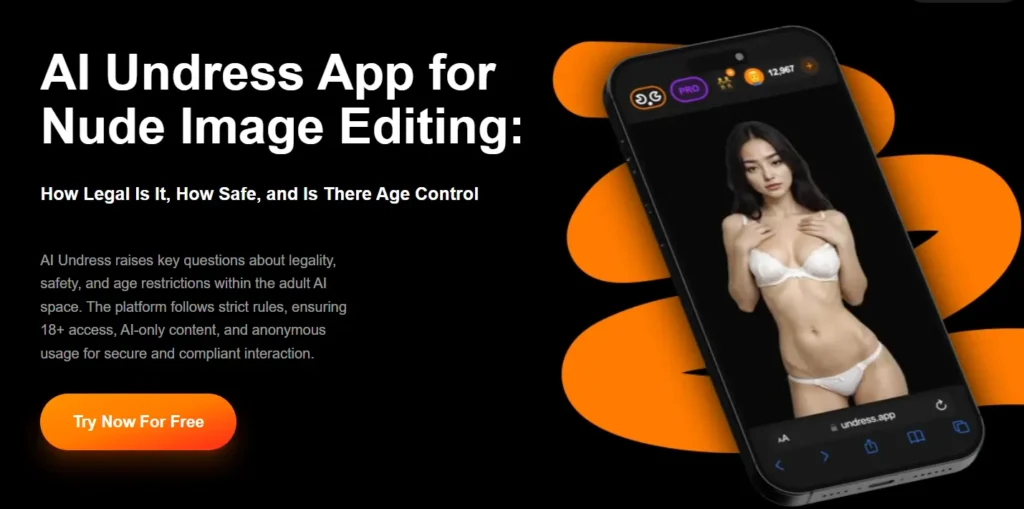
Undress AI should only be used with adult images you own, synthetic characters, licensed content, or clearly consenting adult subjects. Anything else is not curiosity — it is misuse.
Definition
What Does “AI Clothes Remover” Mean?
An AI clothes remover is a type of generative image tool designed to edit clothing areas in a photo. The term is popular because users search for fast, one-click image transformation, but the actual process is more technical than the phrase suggests. A typical AI clothes remover combines:
The goal is not just to erase clothing. Erasing pixels would leave a broken image. The harder part is generating something that looks visually consistent with the original photo. That means matching the pose, light direction, skin tone, body shape, camera angle, and surrounding shadows. This is why some tools look clean while others look like melted plastic.
Safety First
Consent Comes First
Before talking about features, speed, or output quality, we need to be blunt. Undress AI tools should only be used in adult, legal, consent-based situations. Acceptable use cases include:
Acceptable
- Your own adult images.
- Synthetic AI characters.
- Licensed adult images where editing rights are clear.
- Consenting adult creators.
- Adult AI research and tool comparison.
- Fictional image transformation where no real person is harmed
Never
- Minors — no exceptions
- Strangers, friends, or coworkers
- Ex-partners or classmates
- Influencers or celebrities
- Social media or dating photos
- Anyone who has not clearly agreed
Publicly visible does not mean publicly editable. A photo being online does not give anyone permission to generate intimate edits from it. That line matters.
Behind The Scenes
How Undress AI Works?
Most undress AI systems follow a four-stage process.
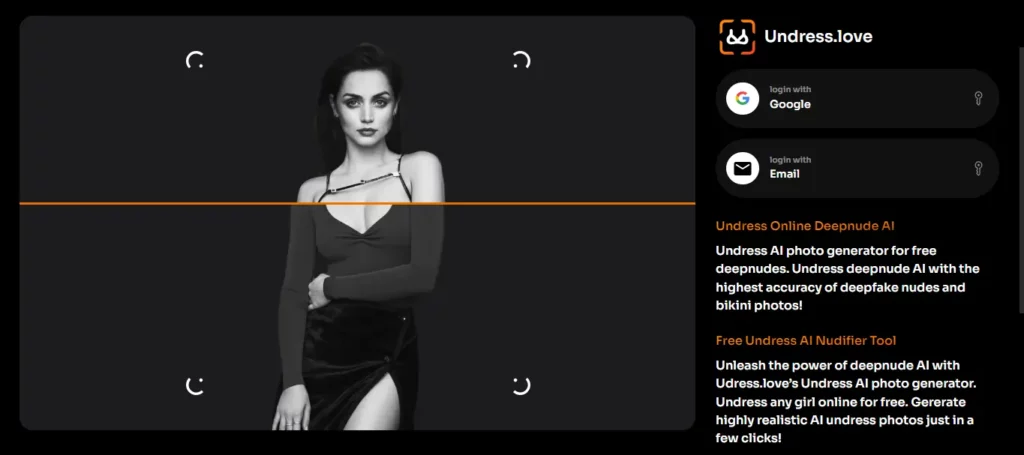
Image Analysis
The tool scans the uploaded image and identifies the main subject, pose, clothing areas, body outline, visible skin, lighting direction, and background structure. This first step matters because bad detection ruins everything that comes after it. If the system misreads an arm, sleeve, shadow, or accessory, the final output can become distorted fast.
Clothing Segmentation
Next, the system separates clothing zones from the rest of the image.It tries to understand where the shirt ends, where skin begins, where fabric folds overlap, and how clothing sits on the body. This is one of the most important parts of the entire process. Better segmentation usually means cleaner edges, fewer artifacts, and less weird anatomy.
AI Reconstruction
After segmentation, the generative model creates a synthetic replacement for the clothing area.This is where the “AI” part becomes obvious.The system predicts skin texture, body contours, shadows, and lighting based on patterns it has learned from training data and the visual context inside the image. Strong models produce smoother, more believable results. Weak models produce blurry, warped, or obviously fake edits.
Final Rendering
The tool blends the generated area back into the original image. Good rendering keeps the final result visually consistent. Bad rendering creates obvious seams, strange color changes, warped edges, and unnatural shadows. This final polish is what separates premium-looking AI image transformation from cheap, glitchy output.
Want to compare actual tools?
Skip the guesswork — see which AI clothes remover platforms are fast, private, and worth your time.
User Intent
Why People Use Undress AI Tools?
People search for undress AI tools for different reasons, but most intent falls into a few clear buckets.Some users want to test the limits of generative image editing. Some are adult creators exploring synthetic content workflows.
Some are bloggers, reviewers, or researchers comparing AI image tools. Some are simply curious because the technology feels new, spicy, and slightly unreal.
The core appeal is usually the same:
But speed is not enough. A tool in this category also needs boundaries. The best undress AI platforms are not just fast. They are clear about consent, privacy, content rules, data deletion, and user safety. That is what separates a serious platform from a sketchy one.
Best Undress AI Features
1
Smart Clothing Detection
The tool scans the uploaded image and identifies the main subject, pose, clothing areas, body outline, visible skin, lighting direction, and background structure. This first step matters because bad detection ruins everything that comes after it. If the system misreads an arm, sleeve, shadow, or accessory, the final output can become distorted fast.
2
Realistic AI Reconstruction
A good AI image transformation tool should preserve skin tone consistency, natural shadows, body proportions, pose accuracy, lighting direction, camera perspective, and texture detail. Bad reconstruction creates warped anatomy, blurry skin, plastic texture, and details that look pasted on.
3
Adjustable Output Modes
One fixed output mode is not enough. A stronger platform may include soft transformation, partial edit mode, bikini-style or lingerie-style outputs, full transformation, realism level controls, detail strength, style presets, and regeneration options. More control means a less random, more premium experience.
4
High-Resolution Output
Low-resolution results are a dealbreaker. A better AI clothes remover should support sharp exports with clean edges, better detail, less blur, consistent skin tone, stronger texture, and download-ready output. If a platform charges money but gives soft, pixelated exports, that is a red flag.
5
Fast Processing
A smooth platform should make the workflow feel simple: upload, choose mode, process, preview, download or regenerate. Long queues, failed generations, and unclear progress bars make the experience feel broken.
6
Private Upload Handling
Privacy is not a nice extra in this niche — it is the whole game. Platforms need to be clear about upload security, retention windows, image deletion, account requirements, whether images are reviewed manually, whether uploads are used for training, and how users can request deletion.
7
Mobile-Friendly Design
Good mobile design includes fast upload flow, clear buttons, responsive previews, simple mode selection, easy download, and no broken popups or hidden settings.
8
High-Resolution Output
Users should know what is free, what requires credits, how many images they can generate, whether previews are watermarked, whether downloads cost extra, whether subscriptions renew automatically, and what happens when credits expire.
Feature Comparisons
What To Look For ?
| Feature | Good Tool | Weak Tool |
|---|---|---|
| Image detection | Understands clothing edges, body shape, lighting, and pose | Misreads fabric, shadows, limbs, or backgrounds |
| Output quality | Sharp, realistic, visually consistent | Blurry, warped, fake-looking, or over-smoothed |
| Speed | Fast upload-to-preview workflow | Slow queues and failed generations |
| Controls | Multiple modes, strength settings, regeneration options | One-click output with no flexibility |
| Privacy | Clear deletion policy and secure handling | Vague storage terms or no privacy detail |
| Consent rules | Adult-only, consent-first policy | No meaningful safety language |
| Mobile support | Full feature access on phone | Broken layout or missing features |
| Pricing | Clear credits, limits, and renewal terms | Hidden costs or confusing subscriptions |
| Support | Contact page, help docs, policy pages | No clear way to reach anyone |
| Trust | Explains who the tool is for and what is banned | Makes wild promises with no proof |
Benefits Of AI Clothes Remover Tools
Faster Image Editing
Traditional photo editing takes time, skill, and software experience. AI clothes remover tools simplify the process by automating detection, transformation, and rendering. That speed is the main reason people test them. The user does not need layers, masks, brushes, plugins, or advanced editing knowledge. The tool does the heavy lifting.
Easier Creative Testing
For adult creators, synthetic character designers, and AI image researchers, speed makes experimentation easier. Users can test different looks, outputs, poses, and styles without rebuilding everything manually. This is especially useful when comparing tools or reviewing output quality. You can quickly see which platform handles lighting, body shape, and texture better.
More Output Control
Better tools give users more than one result. They offer mode selection, output strength, style controls, and regeneration options. That matters because not every image needs the same level of transformation. A subtle edit, a lingerie-style output, and a full adult transformation are completely different use cases. Good tools understand that.
Lower Technical Barrier
Most users searching for undress AI are not professional editors. They want something direct.
That simplicity is part of the category’s appeal. A clean interface can make a complicated AI process feel easy.
Better Research And Comparison
This niche moves quickly. New platforms appear, pricing changes, privacy policies shift, and output quality improves. A dedicated undress AI blog can help users compare tools without blindly trusting hype. That is where strong editorial content matters. Instead of just saying “best tool,” a useful page should explain why one tool performs better than another.
Reality Check
Where Undress AI Fails?
Undress AI is not perfect. The output can break when the source image is too complex, too dark, too blurry, or too crowded. Common failure points include crossed arms, baggy clothing, multiple people, heavy shadows, low-resolution uploads, busy backgrounds, extreme poses, cropped bodies, complex patterns, poor lighting, and reflections or mirrors.
The tool can also generate unrealistic anatomy, mismatched skin tone, strange texture, or unnatural edges. That is normal for this type of AI image editing. A strong homepage should admit this. Users trust content more when it explains both the upside and the limits.


Privacy
Privacy Matters More Here
Privacy matters in every AI tool, but it matters even more in adult image editing. Users need to know what happens after they upload. Before using any undress AI platform, check:
If those answers are missing, that is a problem. A private workflow should not be a mystery. It should be obvious before the user clicks upload.
Use Cases
How To Use Undress AI Responsibly?
Use undress AI only in adult, consent-based, legal contexts. That means:
A tool can be technically impressive and still be harmful when used badly. The user is responsible for what they upload, generate, save, and share.
Checklist
Safe AI Image Editing Checklist
Before using any AI clothes remover, run through this checklist.
Confirm the image is allowed
Only use adult images you own, licensed content, synthetic images, or photos where every adult subject has clearly agreed. If consent is unclear, do not upload.
Read The Privacy Policy
Check whether the platform explains image storage, deletion, training use, and third-party access. If the policy is vague, skip the tool.
Check The Pricing
Understand the credit system, free limits, subscription terms, and download rules before paying. Do not trust a tool that hides costs until the final step.
Start With A Safe Test
If you are reviewing a tool, start with synthetic or licensed test images. This avoids privacy risks while still letting you evaluate quality.
Review The Output
Look for artifacts, unrealistic anatomy, mismatched skin tone, strange shadows, and visible seams. Do not assume the first result is the best result.
Delete Sensitive Files
Remove anything you do not need. Do not leave adult files sitting in random downloads folders, shared drives, or cloud backups.
Do Not Share Without Permission
Consent applies to distribution too. Even if someone agreed to editing, that does not automatically mean they agreed to public sharing.
Responsible Use Cases
Synthetic Character Testing
Undress AI tools can be used to test fictional adult AI characters where no real person is involved. This is one of the safer creative use cases because it avoids targeting real people.
Adult Creator Workflows
Consenting adult creators may use AI image tools to test visual styles, promotional concepts, or synthetic variations. The key is that the creator controls the image rights and agrees to the edit.
Tool Reviews
Reviewers can compare AI clothes remover platforms using licensed or synthetic images. This helps evaluate speed, quality, pricing, privacy, and mobile performance without misusing real personal photos.
AI Research
Researchers and writers may study how these tools handle image reconstruction, privacy claims, moderation, and user safety. A responsible review should include both performance and risk.
Private Personal Editing
Adults may use their own images for private experimentation. Even then, privacy checks matter. A personal image uploaded to a weak platform can still become a problem.
Pros And Cons
✓ Pros
- Fast image transformation
- Simple for beginners
- Useful for synthetic adult characters
- Supports creative testing
- Mobile-friendly on better platforms
- Multiple modes on stronger tools
- Saves manual editing time
✗ Cons
- Quality varies heavily between tools
- Free plans are often limited
- Some tools have weak privacy policies
- Complex images can break output
- Pricing can become expensive
- Misuse can cause serious harm
- Legal risk if used without consent
| Pros | Cons |
|---|---|
| Fast image transformation | Quality varies heavily between tools |
| Simple for beginners | Free plans are often limited |
| Useful for synthetic adult characters | Some tools have weak privacy policies |
| Can support creative testing | Complex images can break output |
| Mobile-friendly on better platforms | Pricing can become expensive |
| Multiple modes on stronger tools | Misuse can cause serious harm |
| Good for tool reviews and research | Some claims are hard to verify |
| Saves manual editing time | Legal risk if used without consent |
How To Spot A Trustworthy Platform?
A trustworthy undress AI platform should be clear before the user uploads anything. Look for:
A risky platform often does the opposite. It hides pricing, avoids privacy details, makes wild claims, offers no support, and pushes users to upload before explaining anything important. That is not confidence. That is a warning sign.
Comparison
Undress AI Vs Traditional Photo Editors
| Category | Undress AI Tools | Traditional Photo Editors |
|---|---|---|
| Skill level | Beginner-friendly | Requires editing experience |
| Speed | Fast automated workflow | Slower manual process |
| Control | Depends on tool settings | High precision control |
| Realism | Depends on model quality | Depends on editor skill |
| Privacy | Upload risk if cloud-based | Safer if edited locally |
| Cost | Credits or subscriptions | Software fees or one-time tools |
| Best for | Fast AI transformation tests | Professional manual edits |
| Weak point | Artifacts and privacy risk | Time and learning curve |
Undress AI is faster. Manual editing is more controlled. The right choice depends on use case, privacy needs, skill level, and quality expectations.
How We Compare Undress AI Tools?
When we review or compare tools, we look beyond the homepage claims. We check:
1. Output Quality
2. Speed
3. Privacy
4. Consent Policy
5. Pricing
6. Controls
7. Mobile
8. Support
If a platform cannot answer these questions, it should not be treated as trustworthy.
Get Started
Explore Undress AI Without The Guesswork
The undress AI niche is crowded, spicy, and full of big promises. Some tools are fast. Some are realistic. Some are private. Some are expensive. Some are just chaos with a checkout button.
UndressAI.blog helps you understand the difference. We break down how the technology works, what features matter, which safety rules are non-negotiable, and how to compare platforms before you upload anything sensitive.
Frequently Asked Questions
Does undress AI actually see through clothes?
No. Undress AI does not see through fabric. It uses image analysis and generative models to predict and create new pixels.
Is an AI clothes remover the same as photo editing software?
Not exactly. A traditional editor gives users manual control, while an AI clothes remover automates detection, reconstruction, and rendering.
Is undress AI legal?
It depends on location, consent, image rights, subject age, and how the output is used. Non-consensual intimate image generation or sharing can create serious legal risk.
Can I use a photo from social media?
No. A photo being public does not mean you have permission to create intimate AI edits from it.
What images are safest to use?
The safest options are your own adult images, synthetic AI characters, licensed content, or images where every adult subject has clearly agreed.
What makes a good AI clothes remover?
A good tool should offer realistic output, clear controls, fast processing, transparent pricing, strong privacy policies, and consent-first safety rules.
Do better tools work on mobile?
Yes, stronger platforms usually support mobile browsers with full upload, preview, and download workflows.
Why is consent so important?
Because intimate AI edits can harm real people when created or shared without permission.
What should I check before paying?
Check credits, renewal terms, refund rules, download limits, privacy policy, support contact, and whether the platform has clear adult-only rules.
Learn More
Explore Our Latest Guides
Compare Smarter Before You Upload
Undress AI tools can be fast, impressive, and surprisingly realistic. They can also be risky, messy, expensive, and unsafe when used without consent. That is why we focus on clear comparisons, privacy checks, safety rules, realistic expectations, and adult-only responsible use.
Before you upload anything sensitive, understand the tool. Before you pay, check the pricing. Before you generate, check consent.