Is Undress AI Safe? Photo Privacy, Data & Scam Risks
So you've found an AI that strips clothes off photos. And now you're sitting there wondering, “Should I actually upload something to this, or am I about to hand my private pics to some random bloke on a server farm?”
Completely fair question. And you deserve a straight answer.
This isn't a PR puff piece. Is Undress AI safe to actually use? That's what we're answering here — what actually happens when you use undress AI tools, the real data journey, where the genuine risks live, how scams operate, and what separates the platforms worth trusting from the ones that'll rob you blind. Let's get into it.
⚙️ How Does Undress AI Work? The Real Tech Explained

There's a massive myth doing the rounds that clothing-removal AI somehow sees through fabric. Like Superman. Like magic.
It doesn't. Not even close. Here's what actually happens under the hood:
The AI analyses your uploaded photo, detecting body shape, posture, exposed skin tones, and clothing regions. It then uses a Generative Adversarial Network (GAN) to generate a synthetic nude based on what the model statistically predicts should be there.
The output is AI-invented. It's not a real nude photo. But on quality platforms like Undress.cc or Ainudez, it can look shockingly realistic—proper skin texture, accurate proportions, lighting that actually makes sense.
🤔 Why This Distinction Matters
| Dimension | Why It's Important |
|---|---|
| Legal | Generated imagery is treated differently from real leaked nudes in some jurisdictions, though this is tightening fast. |
| Practical | Output quality tells you directly how much a platform has invested in its infrastructure. |
| Ethical | The harm caused to real people is identical whether an image is “real” or generated. |
All of this processing happens server-side. The moment you hit upload, your image leaves your device and lives on someone else's infrastructure. What happens next depends entirely on the platform—not just what they claim on their website, but what they actually do.
🕵️ Where Does Your Photo Go After You Upload It?
Most guides go vague here. This one won't. When you upload a photo to an AI nudifier or deepnude generator, the data journey looks like this:
Your device → Web server → AI processing pipeline → Output delivery → (Hopefully) Deletion
🔒 Three Actual Privacy Risks Nobody Talks About
The risk isn't just “will someone see my naked photo?” The real risks are more layered than that:

🚩 Undress AI Scams: 5 Tricks That Steal Your Photos
The undress AI market exploded after early deepnude tech went viral in 2019. That attracted an insane volume of copy-paste clone sites, Telegram bots, and outright fraud operations built entirely around harvesting your data and money.
❌ The 5 Scam Patterns You Need to Know
| Scam Type | What They Do | The Real Goal |
|---|---|---|
| Blurry Output Trap | Show a watermarked, degraded result. Charge to “unlock” quality. | Collect payments — the tool never genuinely worked. |
| Free Trial Card Capture | Offer free credits. Store your card. Expire credits in 24–48 hours. | Pressure a purchase before you think clearly. |
| Telegram Bot Scam | Accept your photo + crypto payment. Return nothing useful. | Harvest your actual photo — no recourse whatsoever. |
| Domain Cloning | Clone a legit platform's interface on a near-identical URL. | Steal your login details and card data. |
| Photo Harvesting Operation | Generate a fake blurry output to keep you submitting more images. | Build training datasets; you are the product. |
The blurry output trap is the most common pattern out there. The platform never genuinely worked. The “unlock quality” upsell is just extracting more money from someone who's already handed over their photo.
The domain cloning problem is particularly nasty because it targets users of legitimate platforms. Someone finds Undress.cc through a trusted review, Googles it slightly wrong the next day, and lands on a pixel-perfect clone on a dodgy lookalike domain. Credentials gone. Photo gone. Money potentially gone.
One rule worth remembering permanently: Always verify the exact URL before uploading anything. Bookmark the actual domain and use only that bookmark.
⚖️ Is Undress AI Safe & Legal? Laws You Must Know
Not here to lecture, but this part directly affects you.
| Jurisdiction | Key Law | Penalty |
|---|---|---|
| USA (Federal) | TAKE IT DOWN Act (2025) | Up to 3 years' imprisonment for NCII |
| UK | Online Safety Act 2023 | Criminal liability for sharing deepfake intimate images |
| EU | EU AI Act (in force) | Fines up to €35 million or 7% of global annual turnover |
| 46 US States | State-level NCII legislation | Criminal + civil liability |
| France | Specific deepfake criminalisation law | Criminal prosecution |
Generating nude imagery of real, identifiable people without their explicit consent is no longer just morally iffy. In most jurisdictions, it's a prosecutable offence. Full stop.
The good news: every legitimate platform operating seriously in this space prohibits non-consensual use explicitly in their terms.
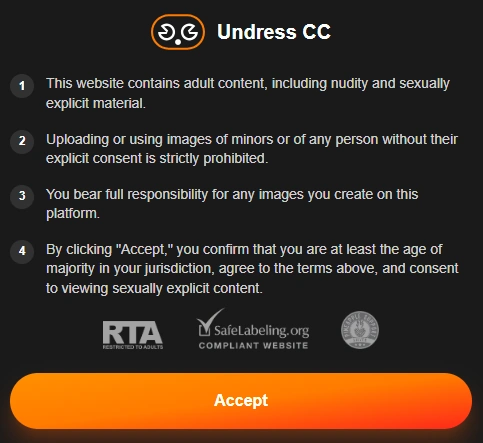
Undress.cc requires age verification at signup and maintains clear ToS prohibiting non-consensual use.
Ainudez follows the same approach. These aren't token gestures; they're legal protections for the platform and the user both.
The ethical use cases—consenting adult partners, AI-generated fictional personas, digital artists working with synthetic characters—are entirely legitimate and legal. Intent determines everything.
✅ Safe vs Fake Undress AI: How to Tell the Difference
Use this as your actual checklist before uploading a single thing anywhere.
🟢 Green Flags — Platform Is Worth Trusting
🔴 Red Flags — Walk Away Immediately
Undress.cc ticks every green flag, UK-registered under ITAI Tech Ltd (searchable on Companies House), Stripe and NodaPay for payments, billing descriptor showing “UNDAPP” or “Direct Marketing” on your statement, and mandatory age verification.
Ainudez does the same, and goes one step further by not even requiring a card to access the free tier, which is one of the clearest signals a platform isn't trying to trap you.
📉 Why Bad AI Nudifier Quality Signals Bad Privacy
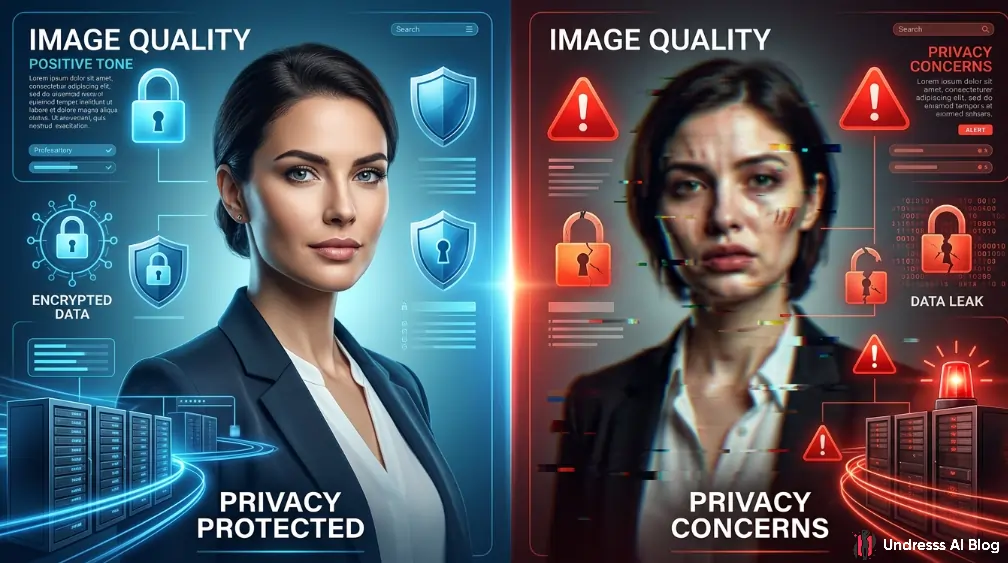
Here's something almost every undress AI guide misses entirely.
Poor output quality isn't just annoying. It's a warning sign about how that platform handles your data.
A platform that's invested in proper model training and infrastructure will produce realistic, detailed, anatomically coherent outputs. A scam or low-effort tool produces blurry, distorted garbage.
If a clothing-removal AI hasn't invested in a decent generative model, it almost certainly hasn't invested in your data security either. The two go hand in hand, both require serious infrastructure and serious intent.
📸 Output Quality Red Flags to Watch For
Platforms like Ainudez and Undress.cc avoid all of these. Ainudez processes images in around 8 seconds and still delivers hyper-realistic skin texture rendering—speed without sacrificing quality.
Undress.cc goes up to 8K resolution on the Pro plan and handles tricky scenarios like layered clothing and diverse body types noticeably better than most competitors. That level of investment in model quality and data infrastructure are not coincidental; they come from the same source.
Whereas the blurry output trap scams? The terrible quality is the product. The worse it looks, the more credits you buy trying to fix it.
🏆 Trusted vs Sketchy AI Undress Tools Compared
Rather than pretending all undress AI tools are the same, here's an honest look at what separates the trustworthy ones from the rest.
| Feature | Trustworthy Platforms (Undress.cc, Ainudez) | Sketchy / Scam Platforms |
|---|---|---|
| Company registration | Real, verifiable, named | Anonymous or non-existent |
| Photo deletion | Stated policy, short timeframe | No policy or deliberately vague |
| Free tier | Genuine, no card needed | Fake, card required, credits expire fast |
| Payment processor | Named (Stripe, NodaPay) | Mystery processor or crypto only |
| Output quality | Realistic, anatomically coherent | Blurry, distorted, watermarked to death |
| Billing descriptor | Neutral (e.g., “UNDAPP”) | Obvious NSFW name or random string |
| Age verification | Mandatory at signup | Absent or checkbox-only |
| Trust scores | 80+ / 100 on security checkers | Low or completely unverifiable |
| Account deletion | Available via email or in-app | Non-existent, your data stays forever |
Undress.cc holds a GridInSoft trust score of 83/100 and is rated legitimate by ScamAdviser. Ainudez consistently ranks among the top-rated AI undress tools across independent review platforms. Both have earned those positions through consistent performance, not marketing spend.
🛡️ How to Use Undress AI Safely: Practical Tips
If you're using these tools, here's how to keep your exposure genuinely minimal:
More Recommendations from Undress AI Blog
🏁 Undress AI Safety Verdict: Which Tools to Trust
Undress AI is not uniformly safe. But it's not uniformly dangerous either. The difference between a trustworthy experience and a privacy disaster comes almost entirely down to which platform you use and how you use it.
Most of the market is junk. Predatory credit traps, anonymous operations, photo harvesting schemes, and Telegram bot garbage built to take your money and your images and give you nothing real in return. That's the honest reality.
But there are genuinely well-built platforms operating honestly in this space.
Undress.cc is UK-registered under a real, searchable company, deletes photos within 24 hours, runs payments through Stripe, produces up to 8K output quality on the Pro plan, and keeps your billing completely discreet.
The lack of a self-serve account deletion button is genuinely irritating. But everything that actually matters for your safety is done properly.

Ainudez hits differently—no-card free tier, ~8-second processing speed, no stored uploads post-generation, clean pricing without a deliberately confusing credit matrix, and hyper-realistic output quality that doesn't sacrifice detail for speed.
For testing the waters or regular use without the commitment overhead, it's a cracking first choice.
Both platforms have earned their reputations honestly. Use either, follow the practical habits above, and you're in a far safer position than the vast majority of people who stumble into this space unprepared.
Just bookmark the actual URL. You'd be surprised how many people land on clones because they Googled it slightly wrong one time. Don't be that person.